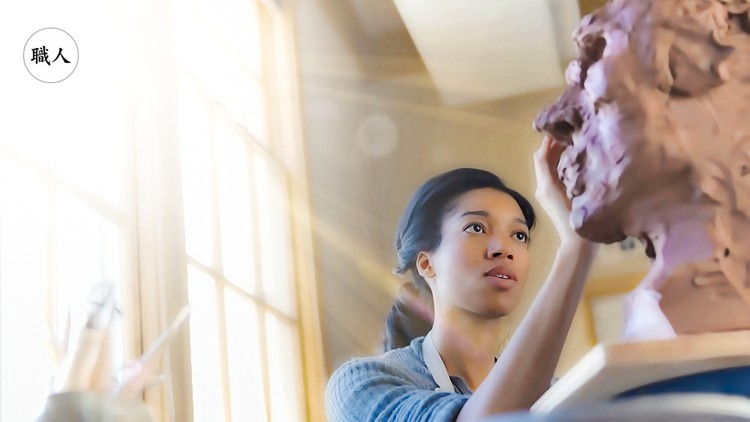
LIFE CRAFTING: The System to Make a Masterpiece of Your Life

- Description
- Curriculum
- FAQ
- Reviews
What Is Life Crafting?
Life Crafting means skillfully shaping 5 key areas of your life incrementally over your lifetime, in line with a vision of what your life can be by knowing what you are going to do, then learning and practicing your skills using a clear recipe vs. living by random trial, and error. This is Making a Masterpiece of Your Life. This is Life-as-a-Craft.
Life-as-a-Craft
‘Life-as-a-Craft’ is a framework based on the practices found in master workshops across the world, applied to practicing ‘life’ as a defined ‘craft’ the way that someone learns and practices textile weaving, woodworking, or any other trade, occupation, and profession; (i.e.) the crafts.
-
Commit to learning the materials and activities of the craft.
-
Observe skilled practitioners (journeymen and masters) at work.
-
Practice all processes and use all tools with skill.
-
Incrementally improve your performance every day.
⫸ You will learn how to systematically practice ‘life crafting’ the time-tested way we learn and practice any trade, occupation, or profession.
Managing Your Life Curriculum: The Five Elements
What you decide to learn and practice throughout your lifetime is your ‘life curriculum’. Much of it was learned from your family heritage. Much will be added as a result of your personal heritage experience and choices.
Life-as-a-Craft contains five categories or ‘elements’ for organizing the content you have already learned or will learn across your lifetime including everything you have and will learn here on Udemy.
-
Family & Personal Heritage – What we learn from the heritage and cultures we come from, how they shape us, and the legacy we leave to the next generation.
-
Family & Household Management – The knowledge we apply to manage the people, guidelines, and environment we live in. Running a successful household is like running a successful workshop.
-
Family & Personal Finance – The methods we learn to produce income and manage money to operate our household. How we integrate our personal financial style with our partner’s style can make or break a household.
-
The Human Being – What we have learned and believe about the structure and functioning of our inner-self and outer-self: our mind, our body, our spirit, and our emotions.
-
Tools for Living – The devices we use to shape ourselves and others. The technologies, systems, and frameworks we use to craft our lives.
⫸ You will learn to organize the life content you have already learned, and new content that will you learn into these five master categories, the same way schools and workshops organize subjects into master categories for easier learning.
Managing Your Life Journey: The Four Phases
Every trade and occupation has an initial period in which the curriculum of the craft is learned, followed by the time span in which the trade is practiced, skills are incrementally improved, and new knowledge is progressively acquired.
Following this time-tested structure, Life-as-a-Craft spans a period of approximately eighty (80) years in Four Phases as taught and practiced for centuries in trades and occupations across the world.
-
Apprenticeship: Age 14–25 | The Learning Phase
-
Journeywork: Age 25–45 | The Building Phase
-
Masterwork: Age 45–65 | The Masterpiece Phase
-
Mentorship: Age 65–85+ | The Legacy Phase
⫸ You will learn the main goal/focus of each life phase, to incrementally improve your practice of the craft of ‘life’ across each phase, and fashion a masterpiece of your life as a legacy to the next generation of your family, and the world.
How You Do Your Work: Performance Excellence
Life-as-a-Craft recognizes the ancient principle of ‘craftsmanship’ or ‘performance excellence’ as a guide to measure one’s proficiency, knowledge, and acquired skill in any subject you endeavor to learn in your lifetime. The result of practicing craftsmanship in everything you do will significantly improve the quality of your personal and professional life, the lives of your family and loved ones.
⫸ You will learn The Way of Craftsmanship: A way of thinking, doing, and living.
-
2
 Practicing Life-as-a-Craft
‘Life-as-a-Craft’ deals with the entire body of knowledge and specific skills we learn and apply to our physical, mental, and spiritual experiences as human beings during our lifetime.
Practicing Life-as-a-Craft adopts this same end objective as you practice incremental improvement across all the topics you have and will choose to learn in the Five Elements making up your unique life curriculum.
The Five Elements: Your Life Curriculum
Life-as-a-Craft organizes this body of knowledge: (i.e.) your life curriculum, into a framework of Five Elements or categories. Each element is a container for related topics making it easy for you to 'check box' topics you have learned thus far in your life and find new related topics to learn over your lifetime presented in Four Phases of development.
Element 1: Family & Personal Heritage
Element 2: Family & Household Management
Element 3: Family & Personal Finance
Element 4: The Human Being (Inner Self & Outer Self)
Element 5: Tools for Living
The Four Phases: Your Life Journey
Apprenticeship - The Learning Phase (Age 14-25)
Journeywork - The Building Phase (Age 25-45)
Masterwork - The Masterpiece Phase (Age 45-65)
Mentorship - The Legacy Phase (Age 65-85+)
The Way of Craftsmanship: The Way You Work
While it will take you all or most of the Four Phases that comprise your lifetime to master Life-as-a-Craft, once you practice excellence in everything you do: the Way of Craftsmanship, you are practicing life success by design vs. success by accident. You are Making a Masterpiece of Your Life.
The end objective of the structure used to teach most crafts practiced in the world is to incrementally improve your performance on your journey toward mastery of the craft.
Practicing Life-as-a-Craft is based on this same structure as you practice incremental improvement across all the topics you have chosen and will choose to learn in the Five Elements making up your unique life curriculum over the Four Phases of your lifetime.
Craftsmanship is the way you perform everything you do in life to produce quality results.
-
3
 Reflective Practice
-
4
Element 1: Family & Personal Heritage
The First Element of learning and practicing Life-as-a-Craft is your Family & Personal Heritage. Your Family is alive with a past, a present, and a future. It is the place from which Human Beings emerge and connect in some form all the days of our lives.
Who you are and who you become is greatly influenced by your connection to family. It is the basis of who we first see ourselves to be. Heritage includes everything you learn from your family and your personal encounter with the world and its many heritages.
These are just a few of the many topics organized within this Element:
Ancestry — also known as Genealogy and your family tree
Family Rituals (special things you do as a Family)
Family Symbols (a Family emblem or Coat of Arms)
Your Family Name
Family Heirlooms & Memorabilia
-
5
Reflective Practice
-
6
Element 2: Family & Household Management
Family & Household Management is like managing a master craftsman’s workshop and is critical to the family’s happiness and success. If you think of household management as managing the 'family workshop’ where people are learning and practicing life-as-a-craft, a wide range of topics can be found within this element.
This includes managing the physical infrastructure of your home and equipment, as well as thoughtful guidelines and processes you will observe and practice as members of the family workshop.
These are just a few of the many topics organized within this Element:
Family Policies
Information Privacy
Grievances & Suggestions
Home, Garden & Equipment Care
-
7
Reflective Practice
-
8
Element 3: Family & Personal Finance
Family & Personal Finance deals with skillfully managing your money. Money is a vital resource to fuel the growth of your family as water is to the growth of a flower. Families and individuals can achieve incremental excellence in this critical element providing an abundance of resources for family and personal growth.
Healthy financial management in a relationship involves learning how to spend and manage your money wisely, using communication and conflict management skills, and building and maintaining a strong foundation of trust with your partner.
These are just a few of the many topics organized within this Element:
Insurance Coverage
Income Generation
Budgeting
Taxes
Credit & Borrowing
-
9
Reflective Practice
-
10
Element 4: The Human Being: Your Inner-Self & Outer-Self
Your life is unique and in the primary care of a single craftsperson. You are that craftsperson. Your life is a work in progress. It is always changing and evolving.
You must learn the characteristics of the Inner Human Being & Outer Human Being just as the potter studies clay or the physician studies human anatomy. Like other natural substances, the Human Being is organic, not a perfectly uniform substance like sheet metal. It must be handled skillfully.
These are just a few of the many topics organized within this Element:
The Inner Human Being
Beliefs
Emotions
Spirit
Values
Personal Goals
Career & Livelihood
Relationships
The Outer Human Being
Birth
Sexuality
Death
Diet & Nutrition
Exercise & Recreation
Grooming & Personal Appearance
Health & Medical Care
-
11
Reflective Practice
-
12
Element 5: Tools for Living
The Fifth Element of Life-as-a-Craft concerns itself with powerful instruments called tools. Generally speaking, tools are objects specifically designed to help us perform a particular task with a higher degree of performance ideally improving the quality of the finished work.
A tool is an extension of the craftsperson. An instrument to harness and shape the energy within us and around us and skillfully focus that energy on the primary material we are working with to achieve a change; that is the desired result.
When using tools to shape your inner-self or outer-self, they must be applied with skill or you run the risk of damaging yourself which may be difficult to repair.
These are just a few of the many topics organized within this Element:
Books, Manuals & References
Journals, Periodicals, Blogs, Newsfeeds
Application Software
Personal Electronic Devices
Mind-Craft Tools
-
13
Reflective Practice
-
14
The Structure of Human Craft: A Model for LIFE CRAFTING
For thousands of years, human beings have organized, learned, and practiced our trades, occupations, and professions.
There is a common framework in use in both the mind-crafts and hand-crafts practiced in every culture of the world:
Each practitioner must continually practice to incrementally improve their skills to advance to more developed levels of proficiency in the craft.
Certifications and titles are often used to designate individuals and their level of proficiency
Apprentice — Novice with limited knowledge or experience.
Journeyman/woman — Credentialed, skilled practitioner.
Master — Advanced credentials, skills, and experienced practitioner.
Mentor — Counselor to the craft.
Life-as-a-Craft follows the same time-tested framework used for centuries in the craftsman's workshops of the world.
-
15
Reflective Practice
-
16
Phase 1: Apprenticeship: The Learning Phase | Age 14-25
Apprenticeship is rooted in the word ‘to apprehend’ or ‘to understand something’. It has as much to do with learning “how to learn” as it does with “what to learn”.
In learning life-as-a-craft, Apprenticeship is the specific period of time during which one learns to comprehend the nature of the raw materials of the craft and the skillful use of the tools of the craft.
The Apprenticeship Phase in the practice of life-as-a-craft is comprised of 3 clear goals to focus the attention of those in the apprentice stage on a defined, measurable outcome:
Goal 1: Transition of Responsibility: The Rite of Passage
Goal 2: Learning How To Learn: The Way of Craftsmanship
Goal 3: The Curriculum — What Is to be Learned
-
17
Reflective Practice
-
18
Phase 2: Journeywork: The Building Phase | Age 25-45
The Journeywork phase in the craft-of-life is comprised of the years of work after Apprenticeship age 25–45 by a competent but as yet undistinguished journeyman or journeywoman.
Journeywork takes strength, endurance, and reliance upon one's Apprenticeship training and growing experience to complete the work.
If you are in the Journeywork phase of life-as-a-craft, you will be at work practicing subjects from The Five Elements you first learned during your apprenticeship as well as diving deeper into those subjects building your knowledge and your skills in the subject. But you will also be choosing new subjects within each of the Five Elements as you move across the Journeyworks phase over the next 20 years or so.
-
19
Reflective Practice
-
20
Phase 3: Masterworks: The Masterpiece Phase | Age 45-65
The Masterwork Phase age 45–65, begins at the culmination of the Journeywork years during which time one distinguished oneself as a skilled craftsperson by the quality of their work.
The Masterwork Phase is the time for executing a master plan based on the resources and energy developed during the Journeywork phase.
Masterworks is the time for executing your master plan and polishing your life — your “ultimate masterpiece.”
-
21
Reflective Practice
-
22
Phase 4: Mentorship: The Legacy Phase | Age 65-85+
The Mentorship Phase spans a 20+ year time period in the practice of life as a craft, during which the primary objective is to gather together select masterworks, knowledge, and skills development exercises as may be recorded in your Master’s Journal.
In the way of craftsmanship, where one’s craftwork is intended to benefit the well-being of the world around us as well as oneself, these selected artifacts from your life are the tangible legacy you will contribute to your family heritage and future generations of apprentices.
-
23
Reflective Practice