JAPANESE SAKE - ESSENTIALS IN BARTENDING & COCKTAILS

- Description
- Curriculum
- FAQ
- Reviews
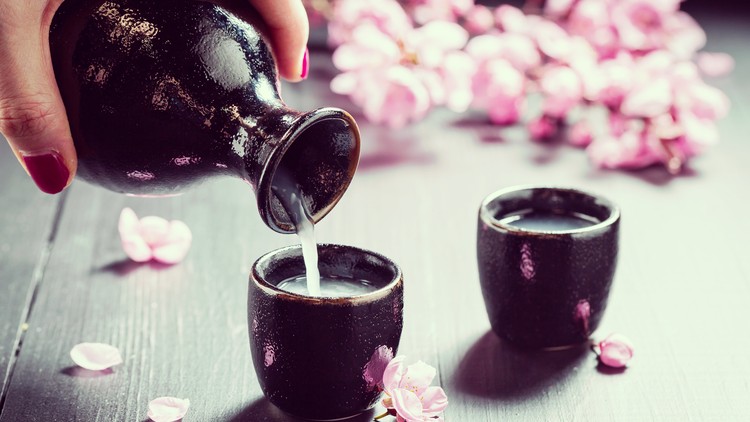
An ancient alcoholic beverage from Japan, that not many Westerners are very familiar with. Now its time to change all that! Alcohol from rice? Yep! Ever wondered what is Sake or what does Sake taste like? We’ll cover that and so much more.
Many want to enjoy this beverage and think its only served hot. You couldn’t be more wrong! We’ll teach everything you need to be able to select, serve, taste and even warm your Sake to the ideal correct temperature to be best enjoyed.
This course will teach you:
- Sake Types and Styles
- Basic Types – Futsu-shu & Tokutei meisho-shu
- Junmai-shu
- Ginjo-shu
- Daiginjo-shu
- Honjozo-shu
- Namazake
- Other Sake Types
- How to Taste Sake like an Expert – (and know what you’re tasting)
- Flavor & Aromas
- Sake & Food Pairing
- Recognizing Off Flavors
- Production
- How to read a Sake label without reading Japanese!
- Japan’s Production Regions
- Sake Brands by Region & Flavors
- History
- Japanese Sake terminology
You don’t need to be a Bartender or Mixologist in a Japanese sushi restaurant to be an expert on Sake.
We’ll give you a solid understanding to make the best selection for personal taste preference or to learn how to pair many varieties of Sake with food. You’ll make better choices and be able to differentiate options, without having to personally try everything out there.
Sake is indeed one of the finer things in life… all should enjoy!
Class is in Session. Drink Up!
-
2
 JAPANESE SAKE TYPES
Sake consists of two basic types, Futsu-shu and Tokutei meisho-shu. Futsu-shu is the ordinary Sake comparable to table wine and makes up the biggest production amounts. Tokutei mei sho-shu, on the other hand is are Special Designation Sake or Premium Sake which is distinguished by factors like the finesse with which polishing of rice has been accomplished, percentage of brewer’s alcohol added or the complete absence of brewer’s alcohol.
Here we'll discuss what's the difference between Special Designation/Premium Sake.
-
3
OTHER JAPANESE SAKE TYPES
Tokutei mei sho-shu or Special Designation/Premium Sake are the famous "sexy" Sakes in the Japanese world. However, there are many other types of Sake that can be enjoyed as well. Some of these Sakes can be considered Premium, but some are not. It's all about how the Sake was produced and less dependent on rice polishing.
Here we'll discuss all the other types of lesser known Sake.
-
4
FLAVORS & AROMAS
Discussing flavors and aromas can be difficult at times as we all have different tolerances and palates. You may or may not be able to taste or smell what I do and vice versa.
Flavors and aromas really depends on the breweries, brands, where it’s made, etc. There are 4 basic words to describe the taste of sake; rich (Hojun / 芳醇)and clean (Tanrei / 淡麗) for flavor, and fragrant (Hanayaka / 華やか)and moderate (Odayaka / 穏やか) for aroma.
‘Rich’ is used for heaviness, thick texture, savoriness, full-body, high acidity and sweetness, whereas ‘Clean’ is used for smooth texture and light body. As for aroma, ‘Fragrant’ is for fruity, floral and other types of distinct aromas. On the other hand, ‘Moderate’ is used for little aromas.
In this section we'll learn about general flavors and aromas commonly found.
-
5
TASTES & TEXTURES
-
6
SAKE & FOOD PAIRING
Although Sake is generally associated with Japanese food, it can be a great companion to many non-Asian meals. Sake can also be used in place of wine when cooking, with great results. As with wine and food pairings, you can either try to match or contrast the flavors of the Sake with the food. Sake can be incredibly complex and there are many different aspects to its taste.
In general, it has a lower acidity than wine and no tannins or preservatives. The flavors can range from herbal and nutty to fruity and floral, to rice-like. While most foods can be paired with Sake, very strongly flavored foods or heavily spiced meals are generally not good choices. Unlike wine, Sake works very well as an accompaniment to foods using heavier amounts of vinegar or soy sauce. The secret of Sake and food pairing is to experiment. There’s no wrong combination as long as you enjoy it.
-
7
UMAMI...? - HOW TO TASTE JAPANESE SAKE LIKE AN EXPERT
Tasting Sake can be difficult as some flavors are very subtle. Learning how to taste and evaluate Sake is a bit different from tasting other alcohols. In this section, we'll learn how to taste like the experts do.
-
8
OFF FLAVORS & FAULT RECOGNIZING
Just like wine, Sake can have flaws or "faults" that cause off flavors, colors and aromas. Here we'll outline a few to be on the look out for.
-
9
SAKE LABELS - HOW TO READ A SAKE LABEL WITHOUT KNOWING JAPANESE
Sake labels can be confusing, especially if you don't read Japanese. Here we'll explain what characters or "Kanji" to look for on a label to pick a quality Sake. Also, make sure to read the attached, "Sake Labels Detailed PDF" as it breaks down each part of a Sake label in great detail.
-
10
 TASTING & SELECTION QUIZ
-
11
WARMING - HOW TO WARM & SERVE HOT SAKE & SAKE SERVING TEMPERATURE GUIDE
In Japan, heating up Japanese Sake is called ‘Okan suru’ and Japanese Sake served warm is called ‘Kanzake’. This uniquely Japanese method of heating Sake has a surprisingly long history and can be dated back over 2000 years.
While not meant for all types of Sake, it can be enjoyable to serve some types of Sake warm or even hot.
Here we'll cover a couple methods to warm your Sake properly.
-
12
SERVE, STORE & ENJOY ! - SAKE STORAGE AND EXPIRATION
Here you'll get to learn more about some Sake storage tips; if you don't drink your Sake all at once or if you want to keep for longer periods of time. We look at how best to store Sake, at what temperature and "expiration", which could really be considered best to enjoy by dates.
-
13
SAKE PRODUCTION REGIONS
Japan stretches far from north to south, so it is only natural that each region has its own climate and cuisine. The raw materials used to make sake, mainly rice and kobo yeast, also differ somewhat by region, so the character of the sake served with the local cuisine is somewhat different, as well.
Here we’ll divide the country into 10 regions, and describe the general distinctive characteristics and select a brand of sake from each one, that represents its style.
-
14
PRODUCTION
Rice, Water, Koji mold & yeast. These are the basic building blocks of Sake. This ancient beverage from Japan is little known but can be quite flavorful and different from one another depending on many factors, the degree of which each rice grain was "polished" being the most important.
In this lecture, you'll learn how Sake is made from start to finish.
-
15
THE TOJI SYSTEM
Tōji in Japanese means head brewer. In Japanese society, Tōji is a highly respected job with the same regard as people have for its painters, musicians and other artists. Each Tōji is associated with a particular school of Sake brewing.
-
16
PRODUCTION QUIZ