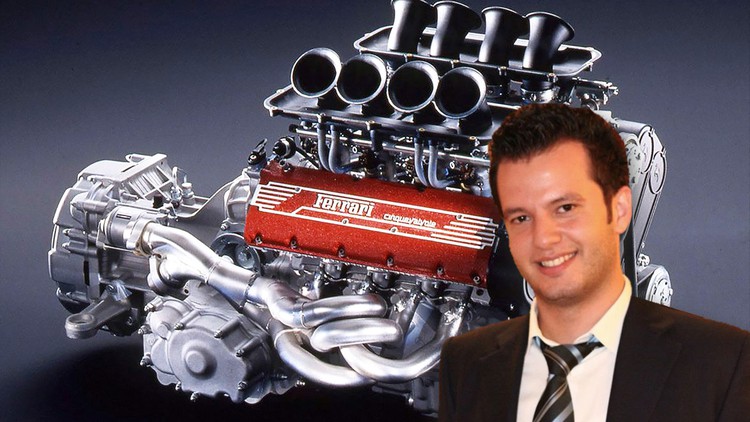
Fundamentals of Internal Combustion Engines

- Description
- Curriculum
- FAQ
- Reviews
The internal combustion (IC) engine is a heat engine that converts chemical energy in a fuel into mechanical energy, usually made available on a rotating output shaft. Chemical energy of the fuel is first converted to thermal energy by means of combustion or oxidation with air inside the engine. This thermal energy raises the temperature and pressure of the gases within the engine, and the high-pressure gas then expands against the mechanical mechanisms of the engine. This expansion is converted by the mechanical linkages of the engine to a rotating crankshaft, which is the output of the engine.
The main focus of this course is on the application of the engineering sciences, especially the thermal sciences, to internal combustion engines. The goals of the course are to familiarize the student with engine nomenclature, describe how internal combustion engines work, and provide insight into how engine performance can be modeled and analyzed.
In this course, we discuss the engineering parameters that are used to characterize the overall performance of internal combustion engines. Major engine cycles are covered such as Otto, Diesel, Dual and Miller cycles. The following lectures will apply the principles of thermodynamics to determine temperatures and pressures throughout an engine cycle, in addition to important engine performance parameters such as: Indicated Thermal Efficiency and the Indicated Mean Effective Pressure. Also we investigate the dependence of engine performance on engine compression ratio and engine load.
An aspect upon which we have put considerable emphasis is the process of constructing idealized models to represent actual physical situations in an engine. Throughout the course, we will calculate the values of the various thermal and mechanical parameters that characterize internal combustion engine operation.
My goal in this course is to help students acquire a solid theoretical background of internal combustion engines. Solved numerical examples are used extensively in this course to help students understand how theory is applied to analyze practical applications.
-
13
 Introduction: The Air-Standard Cycle
 -
14
The Otto Cycle: Constant Volume Heat Addition Cycle
-
15
Thermodynamic Analysis of the Otto Cycle
-
16
Otto Cycle: The Indicated Thermal Efficiency
-
17
Otto Cycle: The Indicated Mean Effective Pressure
-
18
Example 5
-
19
Example 6
-
20
The Diesel Cycle: Constant Pressure Heat Addition Cycle
-
21
Thermodynamic Analysis of the Diesel Cycle
-
22
Diesel Cycle: The Indicated Thermal Efficiency
-
23
Plot of Indicated Thermal Efficiency of Diesel Cycle
-
24
Diesel Cycle: The Indicated Mean Effective Pressure
-
25
Example 7
-
26
Example 8
-
27
Example 9
-
28
Example 10
-
29
Thermodynamic Analysis of the Dual Cycle
-
30
Dual Cycle: The Indicated Thermal Efficiency
-
31
Plot of Indicated Thermal Efficiency of Dual Cycle
-
32
Dual Cycle: The Indicated Mean Effective Pressure
-
33
Cycles Comparison: For the Same Compression Ratio and Heat Addition
-
34
Cycles Comparison: For the Same Compression Ratio and Heat Rejected
-
35
Cycles Comparison: For the Same Max Pressure, Max Temperature and Heat Rejected
-
36
Cycles Comparison: For the Same Maximum Pressure and Heat Input
-
37
Cycles Comparison: For the Same Maximum Pressure and Work Output
-
38
Example 11
-
39
Example 12
-
40
The Miller Cycle
-
41
Indicated Thermal Efficiency: Miller vs Otto
-
42
Indicated Mean Effective Pressure: Miller vs Otto
-
43
Example 13