Building Management Systems: Principles and Practices

- Description
- Curriculum
- FAQ
- Reviews
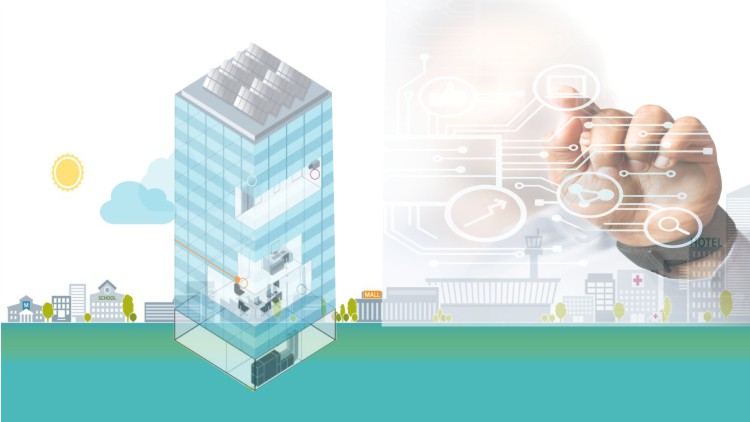
The “Building Management Systems: Principles and Practices” course is designed to provide learners with a comprehensive understanding of the principles, practices, and tools involved in designing, implementing, and optimizing efficient building control systems.
The course covers a broad range of topics related to building management systems, including:
-
Introduction to Building Management Systems (BMS): This includes an overview of the role of BMS in building automation, energy efficiency, and occupant comfort.
-
BMS Components: This covers the different components of a BMS, including sensors, controllers, actuators, and data acquisition systems.
-
BMS Architecture: This includes an overview of the different types of BMS architectures, such as centralized, distributed, and hybrid systems.
-
BMS Communication Protocols: This covers the different communication protocols used in BMS, such as BACnet, Modbus, and LonWorks.
-
BMS Programming and Configuration: This includes an overview of programming and configuration tools used in BMS, such as graphical programming tools and logic-based programming tools.
-
BMS Integration with Other Systems: This covers the process of integrating BMS with other building systems, such as lighting, security, and fire alarm systems.
-
BMS Commissioning and Maintenance: This includes an overview of the commissioning and maintenance process for BMS, including best practices for testing, calibration, and troubleshooting.
Throughout the course, learners will have the opportunity to apply the knowledge gained through hands-on exercises, case studies, and real-world scenarios. By the end of the course, learners will be equipped with practical skills that can be applied in designing, implementing, and optimizing efficient building control systems.
-
1
 Introduction to BMS Control
This lecture provides an overview of the fundamentals of building automation systems and how they are used to manage building operations. Students will learn about the key components of a BMS, including sensors, actuators, controllers, and communication networks. They will also learn about the types of systems that can be integrated into a BMS, such as HVAC, lighting, security, and fire safety.
The lecture will cover the basics of BMS control theory, including the concept of feedback control and the use of control loops to regulate building systems. Students will learn about the various types of control algorithms, including proportional, integral, and derivative control, and how they are used to optimize system performance.
The lecture will also cover the different types of control strategies used in BMS, including single-point control, multivariable control, and advanced optimization techniques. Students will learn about the benefits of each type of control strategy and how they can be used to improve building performance, reduce energy consumption, and enhance occupant comfort.
By the end of the lecture, students will have a foundational understanding of the key concepts and principles of BMS control, as well as the tools and techniques used to manage and optimize building operations. They will be better equipped to work with BMS systems and contribute to the development of more efficient and sustainable buildings.
-
2
Exploring the World of MEP Systems
Improved control and efficiency: Understanding the various MEP systems in a building, such as HVAC, lighting, and plumbing, can aid in the implementation of intelligent automation systems that optimize energy usage, reduce waste, and lower costs.
Enhanced occupant comfort: Knowledge of MEP systems can help automate the delivery of safe and comfortable indoor environments, such as temperature, humidity, and lighting control.
Better monitoring and maintenance: Understanding the MEP systems in a building can help automate the monitoring and maintenance of critical components, such as HVAC systems, reducing downtime and the risk of costly repairs.
Increased sustainability: Knowledge of MEP systems can help automate sustainable and environmentally-friendly practices, such as optimizing natural light and ventilation, leading to reduced energy consumption and carbon footprint.
Improved security and safety: Understanding the MEP systems in a building can help automate security and safety protocols, such as fire suppression and access control, leading to increased occupant safety.
Career opportunities: Learning about MEP systems in the context of building automation can lead to career opportunities in the fields of engineering, automation, and facilities management.
-
3
Understanding the BMS Layer and Its Role
Each layer of the BMS is critical for effective building automation and control. The hardware layer provides the necessary data inputs, while the software layer processes this data and sends the appropriate commands to the building systems. The management layer provides the overall control and management of the BMS system, ensuring that it operates effectively and efficiently. The successful integration and coordination of these layers are essential for the optimal operation of the BMS and the building systems it controls.
-
4
Benefits of BMS Control
Building Automation System control can provide numerous benefits to a building, including energy savings, improved occupant comfort and productivity, enhanced security, increased operational efficiency, predictive maintenance, and sustainability.
-
5
Introduction to Sensors and Actuators
In this lecture, we will begin by discussing the basic principles of sensing and actuation, including the different types of sensors and actuators, their principles of operation, and common applications. We will then cover the interface circuits used to connect sensors and actuators to a control system, including voltage and current measurement, signal conditioning, and digital-to-analog and analog-to-digital conversion.
By the end of this lecture, you will have gained a deeper understanding of the fundamental concepts and applications of sensors and actuators in control and automation systems, and how they can be used to build more efficient, reliable, and intelligent systems.
-
6
Sense and Sensibility: An Introduction to Sensors and Their Applications
The sensor lecture is designed to provide an introduction to the fundamentals of sensors and their applications in various fields. The lecture covers different types of sensors, including active and passive sensors, and provides an in-depth understanding of their operating principles and mechanisms.
-
7
Exploring Actuators and Their Applications in Control Systems
The lecture would start with an overview of the basic principles of actuators, including the different types of actuators such as electric, hydraulic, pneumatic, and piezoelectric. The lecture would delve into each type of actuator, their construction, operation, and limitations.
-
8
Understanding the Importance of Data Sheets
The lecture would provide an overview of the purpose of data sheets and the information contained in them. The audience would understand that data sheets provide detailed technical specifications, operating conditions, maintenance requirements, and safety information related to a specific component or piece of equipment.
It will also highlight the benefits of using data sheets, including improved safety, reduced downtime, increased efficiency, and cost savings. The audience would understand that data sheets are critical in ensuring safe and efficient operation of field systems.
-
9
Introduction to Air Handling Unit (AHU)
Discover the fundamental functions of the air handling unit and the connections needed to install a sensor or other device to link it to the building management system.
-
10
Optimizing Air Quality: AHU Filter Monitoring for Efficient Building Management
In a Building Management System (BMS) lecture on AHU filter monitoring, you might learn about the following topics:
The importance of AHU filter monitoring in maintaining healthy indoor air quality.
The different methods of AHU filter monitoring, including manual inspections and automated sensors, and their advantages and limitations.
The principles of filter performance measurement, including pressure drop, airflow rate, and filter efficiency.
Setting up Sensors that can monitor filters if it is clean or dirty.
-
11
AHU Modulating Valves for Improved Building Management
The lecture on AHU modulating valves will provide you with a comprehensive understanding of the importance of efficient airflow control in building management and the different methods available for achieving this, with a focus on modulating valves for AHUs.
-
12
Optimizing HVAC Systems with AHU Duct Sensors: A Building Management Approach
The lecture on AHU duct sensors will provide you with a comprehensive understanding of the role of sensors in HVAC system optimization and the different types and applications of AHU duct sensors. You will learn about the principles of sensor operation, selection and installation considerations, integration with a BAS, and the benefits and limitations of AHU duct sensors in building management.
-
13
Maximizing HVAC Efficiency: AHU Flow Status Monitoring
The lecture on AHU flow status monitoring will provide you with a comprehensive understanding of the importance of airflow monitoring in HVAC systems and the different methods available for measuring AHU flow status. You will learn about the principles of flow measurement, sensor selection and installation considerations, integration with a BAS, and the benefits and limitations of AHU flow status monitoring in building management.
-
14
Efficient Airflow Control: Air Damper Actuators for Improved Building Management
Learn how Air damper actuator regulate the flow of air through an AHU system and where it is located. Connecting AHU air damper actuators to a BMS provides numerous benefits, including energy savings, improved comfort, fault detection, and historical data analysis. It allows building managers to optimize the performance of their HVAC system, resulting in increased energy efficiency, reduced costs, and improved indoor air quality.
-
15
Understanding AHU Fan Status: Importance, Monitoring, and Maintenance
Understanding of how to install AHU fan status sensors and connect them to a BMS, as well as the steps required to ensure they function properly and safely in an AHU system.
-
16
Introduction to Data Gathering Panel
Understanding the BMS and its data gathering capabilities: The course should provide an overview of BMS and its role in building operations and maintenance. The course should explain how the BMS collects and stores data, and the various sensors and devices used to gather data.
-
17
Understanding the Controller and I/O Modules of a Data Gathering Panel (DGP)
Understanding controllers and I/O modules of a DGP is an essential skill for anyone working in the field of data acquisition and analysis, as it is the foundation of the entire data collection process.
-
18
Guide to Wiring a Data Gathering Panel for Efficient Data Collection
Taking up a guide in wiring a DGP lecture can be a valuable learning experience for anyone who wants to gain practical skills in data acquisition and analysis. Here are some of the topics that you can expect to learn in such a lecture:
Introduction to data acquisition systems: This includes an overview of the components of a typical data acquisition system, such as sensors, controllers, and I/O modules.
DGP wiring basics: This covers the fundamental concepts of wiring a DGP, including wiring standards, cable types, grounding techniques, and safety precautions.
Types of sensors and signal conditioning: This includes an overview of the different types of sensors used in data acquisition systems, such as temperature, pressure, and strain sensors, and the role of signal conditioning in preparing sensor signals for processing.
-
19
Connecting and Integrating Filter Sensors into a Data Gathering Panel:
The lecture is designed to provide learners with a comprehensive understanding of the principles and practices involved in connecting and integrating filter sensors into a data acquisition system. Upon completion of the course, learners will be equipped with practical skills that can be applied in a wide range of industries, including manufacturing, aerospace, and medical device manufacturing.
-
20
Connecting and Integrating Supply and Return Air Flow Sensors to a BMS
To provide learners with practical skills that can be applied in designing, installing, and maintaining air flow sensors in HVAC systems. Upon completion of the lecture, learners will be equipped with a comprehensive understanding of the principles and practices involved in integrating air flow sensors into a building management system.
-
21
Integrating Temperature and Humidity Duct Sensors into a Data Gathering Panel
The lecture is designed to provide learners with practical skills that can be applied in designing, installing, and maintaining temperature and humidity sensors in HVAC systems. Upon completion of the lecture, learners will be equipped with a comprehensive understanding of the principles and practices involved in integrating temperature and humidity duct sensors into a data acquisition system.
-
22
Connecting Air Pressure and Air velocity duct sensor to DGP
To provide learners with a comprehensive understanding of the principles and practices involved in integrating air pressure and air velocity duct sensors into a data acquisition system.
-
23
Connecting Damper Actuator to DGP
To provide learners with practical skills that can be applied in designing, installing, and maintaining air damper actuators in HVAC systems. Upon completion of the lecture, learners will be equipped with a comprehensive understanding of the principles and practices involved in integrating air damper actuators into a data acquisition system.
-
24
Introduction to BMS Network Infrastructure
BMS network infrastructure refers to the physical and logical components that make up the network used by a building management system. It includes the cables, routers, switches, firewalls, servers, and other network devices that enable the BMS to function effectively.
-
25
Leveraging Advanced Techniques for BMS Network Optimization
This course is designed to equip participants with the knowledge and skills required to optimize BMS network infrastructure continually. Participants will gain a comprehensive understanding of advanced networking concepts, best practices, and techniques for BMS network optimization, allowing them to maximize building efficiency and reduce energy costs.